
From butterflies to art & the meditation of a father-to-be, how metamorphosis informs us about ourselves, change, & interconnectedness
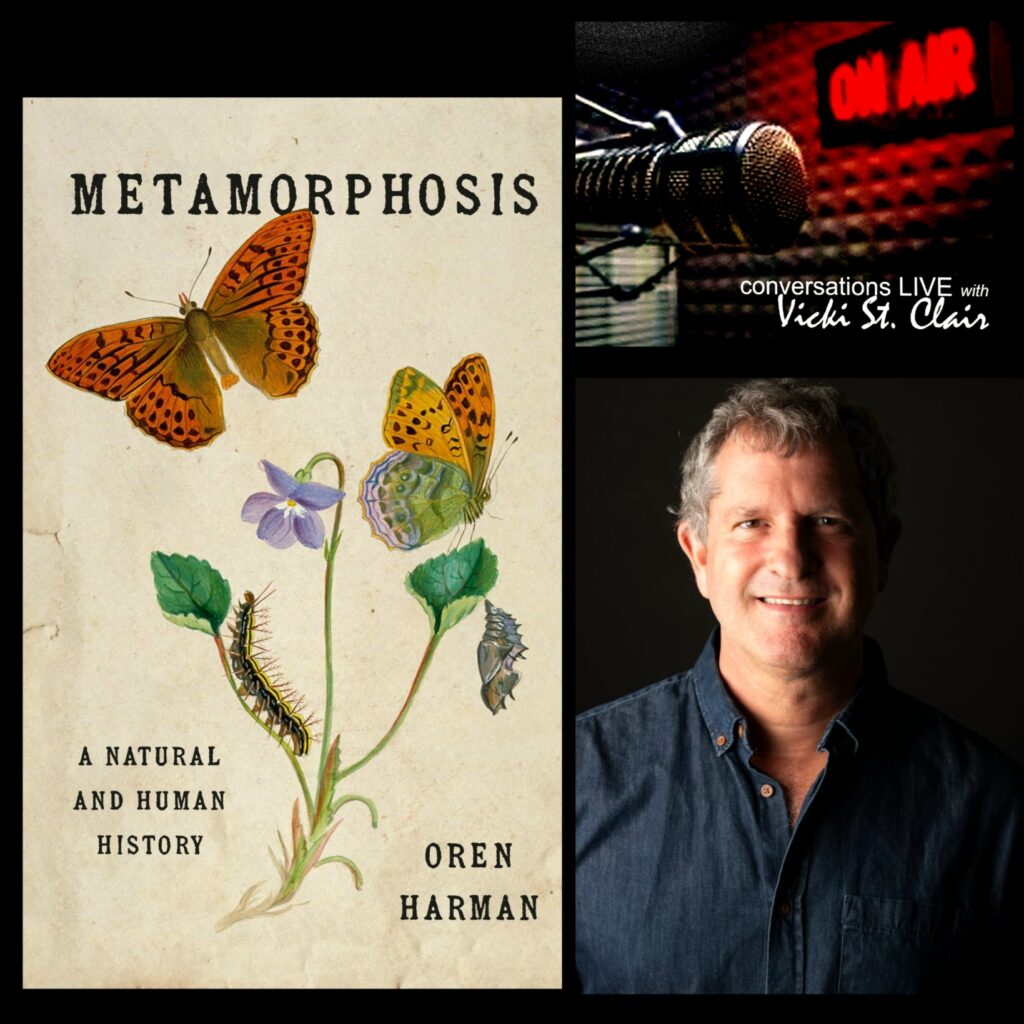
Professor Oren Harman‘s latest book, Metamorphosis: A Natural and Human History, tackles one of biology’s oldest and most wondrous riddles: Why do three-quarters of all animal species on earth undergo some form of metamorphosis?
Part science history, part memoir, part philosophy, and part meditation of a father-to-be, the stories in Metamorphosis take us from Aristotle to Darwin, and the cutting edge of molecular biology and humanity.
We explore how metamorphosis has inspired centuries of philosophers, artists, writers, and culture. We also discuss why a caterpillar must dissolve and rewire it’s brain to become a butterfly. Freud’s obsession with eel testicles (yes, you read that right!) Why ‘Benjamin Button’ jellyfish grow younger in the ocean’s depths.
And, what metamorphosis teaches us about the human self, connection, and change.
Meet Professor Oren Harman
Professor Oren Harman has written numerous acclaimed books including: The Man Who Invented the Chromosome; Rebels, Mavericks and Heretics in Biology; and The Price of Altruism, which won the 2010 Los Angeles Times Book Prize for Best Book of the Year in Science and Technology. It was also a New York Times Notable Book of the Year and was nominated for the Pulitzer prize. Professor Harman is Senior Research Fellow at the Van Leer Jerusalem Institute, and teaches at the Graduate Program in Science Technology and Society at Bar Ilan University. Trained in history and biology at the Hebrew University, Oxford, and Harvard, Harman is a historian of science and has written widely for popular and professional audiences on genetics, evolution, history and philosophy of science, altruism, biography, and science and mythology. Today we discuss Professor Harman’s latest work Metamorphosis: A Natural and Human History.